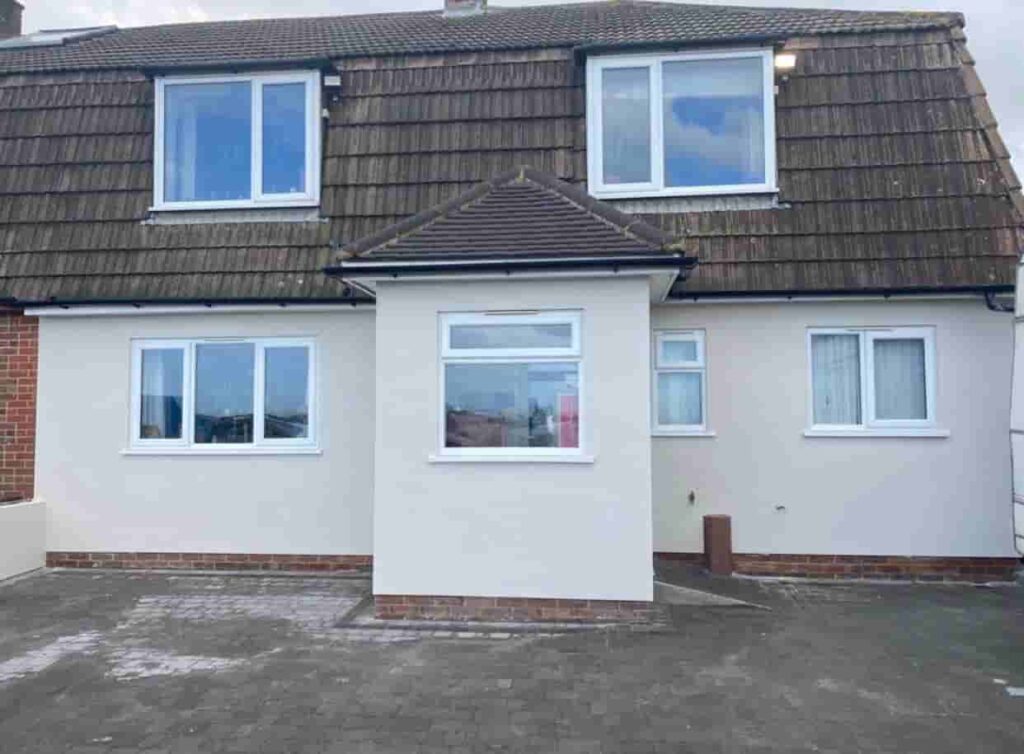
A slipped roof tile can seem like a small roofing defect, particularly when only one tile appears to have moved and the remainder of the roof looks intact. However, tiled roofs depend on correctly positioned components working together. When one tile slips, it can create an opening in the covering and may sometimes indicate that nearby fixings, tiles or supporting materials also need attention.
For homeowners in Croxley Green, Hertfordshire, dealing with a slipped tile promptly can help keep a localised defect from becoming a more extensive roofing problem. Wind and rainfall can continue acting on an already disturbed section, while exposed areas beneath the tile may receive less protection than intended.
The important step is to establish why the tile has moved. A professional roof repair should not simply improve the appearance of the affected section; it should consider the tile, its fixing, the supporting batten and neighbouring components so that an appropriate repair can be carried out.
How Can Repairing a Slipped Tile Help Prevent Further Roof Damage?
Roof tiles are arranged to overlap and form a continuous protective covering. When one tile moves significantly out of position, that arrangement becomes disrupted. The resulting gap can expose materials beneath the main covering and leave adjoining tiles more exposed around their edges.
This does not mean that one slipped tile will inevitably cause several others to fail. In many cases, the problem remains isolated. However, identifying and repairing the original defect early provides an opportunity to check the surrounding section before further movement or weather exposure creates additional problems.
A Slipped Tile Is Usually a Symptom of Something Else
Tiles do not normally move without a reason.
The cause may be confined to the individual tile or fixing, but it can also involve the support beneath it.
Possible factors can include a damaged tile, deteriorated fixing, weakened batten or previous movement within the surrounding section.
Understanding the cause is more useful than simply repositioning the visible tile.
Roof Tiles Need Correct Overlap
The effectiveness of a tiled roof depends partly on how individual tiles overlap.
This arrangement helps direct rainfall down the roof towards the drainage system.
When a tile slips downwards or moves sideways, the intended overlap can be reduced.
An opening may then appear where the underlying roof construction was previously protected.
Restoring the tile arrangement helps reinstate the continuity of the roof covering.
One Loose Tile Can Leave Adjacent Edges More Exposed
Neighbouring tiles may remain securely fixed after one tile slips.
However, the gap created by the displaced tile can alter the amount of exposure around the surrounding section.
This can be particularly relevant during windy conditions.
Checking adjoining tiles during the repair helps confirm whether they remain correctly positioned and secure.
Wind Can Worsen Existing Movement
A roof in good condition is designed so that its components work together as a complete covering.
Once a tile becomes loose or moves out of position, exposed edges can interact differently with wind.
Continued weather exposure may cause the original tile to move further.
Where neighbouring components are already showing deterioration, additional movement may also become apparent.
Prompt attention reduces the time that the affected section remains disturbed.
Repeated Tile Movement Deserves Wider Investigation
One slipped tile can be a straightforward local repair.
The situation becomes different when tiles repeatedly move from the same section.
If several tiles have slipped over time, there may be a common underlying reason.
Repeatedly repairing each visible tile without considering the surrounding construction can leave the cause unresolved.
A broader inspection can determine whether the problem remains localised or requires attention across a wider area.
Tile Fixings Can Deteriorate
Different tiled roofs use different fixing arrangements.
Over time, individual fixings can deteriorate or become ineffective.
Where one fixing has failed independently, repairing that particular tile may be sufficient.
Where similar deterioration is affecting neighbouring fixings, additional tiles may become increasingly vulnerable to movement.
This is why examining the surrounding section adds value to a slipped tile repair.
The Tile Itself May Be Damaged
A tile that appears to have simply slipped may actually be cracked or broken.
Damage around a fixing point can allow the tile to move while leaving much of it apparently intact.
From ground level, this distinction can be difficult to identify.
Closer assessment determines whether the existing tile can be appropriately secured or whether a suitable replacement is required.
Battens Need to Provide Reliable Support
Roof battens support the tiled covering.
If a batten has deteriorated or become damaged around the affected area, simply returning the tile to its original position may not resolve the problem.
The supporting section should be checked where necessary.
A repair that addresses the support beneath the tile is more appropriate than repeatedly correcting visible movement without considering its cause.
Underlay Should Not Be Relied Upon Instead of the Tile Covering
Tiled roofs commonly include an additional layer beneath the outer covering.
While this can provide secondary protection, it should not be regarded as a permanent substitute for correctly positioned tiles.
Its condition can also vary depending on the age and construction of the roof.
Repairing a slipped tile restores the outer covering rather than leaving underlying materials unnecessarily exposed.
Rain Can Reach Areas Normally Protected by the Tiles
A displaced tile creates a potential route for rain to reach beneath the main covering.
The amount of water involved will depend on the location of the gap, surrounding roof details and weather conditions.
Wind-driven rain can be particularly relevant because water may reach openings from different directions.
Closing the gap helps restore the roof’s intended weather protection.
A Leak May Not Appear Immediately
A common mistake is assuming that a slipped tile is harmless because there is no damp patch inside the property.
Water entering a roof does not necessarily become visible immediately.
It can travel along roofing materials or remain within less visible parts of the roof construction before reaching an internal surface.
The absence of an obvious ceiling stain is therefore not a reason to leave a known roof defect unresolved.
Water Can Travel Away From the Entry Point
The location of an internal damp mark does not always identify the exact position of the external defect.
Water can move along underlay, timber and other components before appearing elsewhere.
This can make roof leaks difficult to diagnose from inside the property alone.
Where a slipped tile and internal damp are both present, the complete affected area should be assessed rather than assuming the relationship between them without inspection.
Prolonged Moisture Exposure Can Affect Supporting Materials
The purpose of the outer roof covering is to protect the construction beneath.
If a gap remains open for an extended period, repeated rainfall can increase moisture exposure within the affected area.
This does not mean substantial deterioration occurs immediately after one tile slips.
It means that prompt repair removes an unnecessary route through which weather can reach normally protected components.
Early Repairs Can Keep the Work Localised
One of the strongest reasons for addressing slipped tiles promptly is that the defect may remain relatively contained.
If one damaged fixing or tile is responsible, a focused repair may restore the section.
Leaving the problem until additional tiles move or underlying materials become affected can increase the extent of the work required.
Early assessment provides the best opportunity to understand the problem while it remains limited.
A Slipped Tile Does Not Mean the Whole Roof Needs Replacing
Prompt attention should not be confused with assuming the worst.
One displaced tile does not mean that the entire roof covering is failing.
If the surrounding tiles, battens and other components remain serviceable, the appropriate solution may be a straightforward local repair.
Professional assessment should establish what is actually required rather than recommending unnecessary work.
Older Tiled Roofs Can Still Be Suitable for Targeted Repairs
Roof age alone does not determine whether a local repair is worthwhile.
An established roof may develop an isolated slipped tile while the surrounding covering remains in reasonable condition.
In this situation, repairing the affected section can be entirely appropriate.
The decision should be based on actual condition and the pattern of defects rather than age by itself.
Several Loose Tiles Can Change the Picture
Where multiple tiles are visibly displaced, the surrounding section deserves closer inspection.
Several loose tiles can indicate that the problem extends beyond one isolated fixing.
The condition of battens, fixings and nearby tiles may need to be considered together.
This allows the repair to address the affected area coherently rather than treating each tile as an unrelated problem.
Previous Repairs Can Provide Useful Clues
If the same part of the roof has required slipped tile repairs before, that history can help with diagnosis.
The latest movement may still be an isolated issue, but repeated defects within one section can indicate a common contributing factor.
Looking at previous repair areas can help establish whether the roof requires another local repair or broader attention.
Surrounding Cracked Tiles Should Be Identified
A slipped tile can draw attention to a section of roof that has not previously been closely examined.
Nearby tiles may contain cracks or other damage even though they have not yet moved.
Identifying these defects during the same assessment helps provide a clearer picture of the local roof condition.
Only components that genuinely require attention should be included within the repair.
Tiles Near Roof Edges Can Be More Exposed
The location of the slipped tile matters.
Tiles positioned around more exposed sections of a roof may experience different weather effects from tiles within sheltered areas.
If movement occurs close to an edge, the surrounding components should be checked carefully.
The objective is to understand whether the problem affects only one tile or whether neighbouring elements also require attention.
Ridge and Hip Areas Should Be Considered Where Relevant
Where slipped tiles are located near ridges or hips, nearby roof details can form part of the assessment.
Movement within one area does not automatically mean another component has failed.
However, checking adjoining details helps avoid overlooking a separate weakness close to the obvious defect.
A roof should be assessed as a connected system rather than as completely independent components.
Valleys Can Concentrate Rainwater
Roof valleys carry water from adjoining slopes.
A displaced tile near a valley can therefore be particularly important to investigate.
The surrounding tiles and valley area should remain correctly arranged so that rainfall can continue following its intended route.
Repairing the visible tile while overlooking deterioration immediately beside it may leave another potential source of water entry.
Flashing Should Be Checked When the Defect Is Nearby
Tiles around chimneys and other roof junctions often work alongside flashing.
If a slipped tile develops near one of these details, it can be useful to check the complete local area.
The tile movement may have nothing to do with the flashing.
However, where the original concern involves water entry, assessing both components helps establish the actual source rather than making assumptions.
Stormy Conditions Can Reveal Existing Weaknesses
Strong winds do not necessarily create every problem from scratch.
They can expose weaknesses that were already developing within tiles, fixings or supporting components.
A tile that moves during windy weather may therefore indicate that its attachment was no longer performing as intended.
Inspecting the surrounding area can identify whether other components show similar signs of deterioration.
The First Visible Tile May Not Be the Only One Moving
A clearly slipped tile is easy to notice because it creates an obvious gap.
Neighbouring tiles can sometimes move by smaller amounts that are less apparent from ground level.
Professional inspection can identify whether the surrounding covering remains correctly seated.
This is valuable because early movement may be addressed before another tile becomes obviously displaced.
Roof Appearance Can Provide Useful Warning Signs
Homeowners may notice changes such as:
- A tile sitting lower than surrounding tiles
- An obvious gap within the roof covering
- Uneven rows of tiles
- A broken tile
- Material appearing out of position
- More than one tile beginning to move
These visual changes do not provide a complete diagnosis, but they can indicate that professional assessment is worthwhile.
Internal Signs Can Also Suggest a Problem
A slipped tile may sometimes be discovered after signs appear inside the property.
These can include damp marks or changes to internal finishes.
However, the visible tile should not automatically be assumed to be the only cause.
Roof leaks can originate from different components, so inspection should establish the actual entry point before repair work is planned.
Repairing the Tile Correctly Is More Important Than Simply Moving It Back
A slipped tile can look as though it only needs pushing back into its original position.
That may not address the underlying reason it moved.
If the fixing is damaged or the support beneath it has deteriorated, the tile may become loose again.
An appropriate repair considers what is required to secure the affected section rather than simply restoring its appearance.
Temporary Positioning Is Not the Same as a Proper Repair
A tile that has been moved back into place may look normal from outside.
Appearance alone does not confirm that it is securely supported.
The relevant fixing and supporting components should be considered.
A properly completed repair should aim to restore the function of the roof covering, not merely conceal the visible gap.
Roof Repairs Should Be Based on Diagnosis
Effective roofing work begins by identifying the defect.
For a slipped tile, an assessment may consider:
- The condition of the displaced tile
- Its fixing
- The relevant supporting batten
- Nearby tiles
- Signs of additional movement
- Previous repair areas
- Adjacent roof junctions
- Any evidence of water entry
- Whether the defect is isolated or recurring
This information helps determine the most proportionate repair.
More Work Is Not Automatically Better
A professional roofing assessment should not turn a small defect into unnecessary extensive work.
Where the issue is genuinely confined to one tile, the repair can remain focused.
Where several related weaknesses are found, the affected section can be addressed accordingly.
The amount of work should reflect the roof’s actual condition.
Recurring Slipped Tiles Should Not Be Treated Individually Forever
If different tiles repeatedly become loose within the same area, continuing to repair them one at a time may eventually become ineffective.
At that stage, the surrounding construction should be considered more broadly.
A repeated pattern can provide useful information about the condition of fixings or supporting materials.
Identifying that pattern can help prevent ongoing patch repairs that never address the underlying issue.
Timely Repair Can Help Preserve the Surrounding Roof
A slipped tile is easier to manage when the surrounding section remains unaffected.
Prompt repair restores the intended covering and limits unnecessary exposure beneath it.
It also provides an opportunity to identify nearby weaknesses before they develop into more obvious defects.
This is the practical value of dealing with tile movement early rather than waiting until several tiles have become loose.
Not Every Tile Problem Is Visible From Ground Level
Although homeowners can often identify an obvious gap, detailed roof condition is difficult to judge from below.
Fixings and battens are generally concealed by the roof covering.
Small cracks may also be difficult to see.
Professional assessment can provide a more accurate understanding of the affected section without relying solely on its appearance from the garden.
Localised Repairs Can Be an Effective Long-Term Approach
Where a tiled roof remains generally sound, individual defects can often be managed as they arise.
A properly diagnosed local repair can restore the affected area without interfering unnecessarily with serviceable parts of the roof.
This makes accurate assessment important.
The objective is not simply to carry out the smallest possible repair, but to complete the right amount of work for the condition found.
When Does a Slipped Tile Require Wider Roof Attention?
A wider assessment may be appropriate when:
- Several tiles have become loose
- Tiles repeatedly slip from the same section
- Multiple tiles are cracked or damaged
- Previous repairs have not stopped recurring movement
- Supporting materials show deterioration
- Water entry continues after earlier repairs
- A larger section appears uneven
- Several roofing components are showing deterioration together
These signs do not automatically mean extensive work is necessary, but they justify investigating beyond the most obvious tile.
Professional Repairs Can Address the Cause Before the Pattern Spreads
The value of professional slipped tile repair comes from understanding why the movement occurred.
Where the defect is isolated, a targeted repair can restore the covering.
Where a wider issue is developing, identifying it early can allow the affected section to be addressed before additional tiles become visibly loose.
This cause-based approach provides a more reliable basis for maintaining a tiled roof.
Professional Slipped Tile Repairs in Croxley Green, Hertfordshire
At LS Roofing Croxley Green, we assess slipped and loose roof tiles together with the surrounding roof covering.
The condition of the tile, fixing, supporting materials and neighbouring components can all provide important information about why movement has occurred.
For homeowners in Croxley Green, Hertfordshire, this approach allows the repair to remain proportionate while ensuring that nearby weaknesses are not overlooked.
Conclusion
Slipped roof tiles are worth repairing promptly because the roof covering relies on individual tiles remaining correctly positioned and supported. Once a tile moves, underlying materials can become more exposed, while wind and rainfall may continue affecting the disturbed section.
A single slipped tile does not automatically indicate widespread roof failure. In many cases, the defect remains localised and can be resolved with an appropriate targeted repair. The important factor is establishing why the tile moved and checking whether surrounding tiles, fixings and supporting materials remain secure.
Addressing the problem while it is still limited can help prevent a pattern of additional loose tiles and reduce unnecessary exposure of the roof beneath.
If you have noticed slipped or loose roof tiles at your property in Croxley Green, Hertfordshire, contact LS Roofing Croxley Green. We can assess the affected area, identify the likely cause and recommend an appropriate repair based on the condition of the roof.
Call us on: 01923 961 797
Click here to find out more about LS Roofing Croxley Green
Click here to complete our contact form and see how we can help with your roofing needs.